16 tips to prolong the life of your vehicle

1-Drive safely (and carefully) every day
These few good and prudent habits will make all the difference to your vehicle’s condition in the long term!
- Accelerate smoothly when you start the vehicle! It’s within the first 10 to 20 minutes of running that the motor and powertrain undergo the most wear.
- Warming up the motor by letting it idle is not a good idea. Since the motor is not running at its optimal temperature, the fuel combustion does not happen completely.
- This leads to soot deposits on the cylinder walls which then contaminate the oil and eventually damage certain components.
- Put less strain on the motor and automatic transmission by shifting into neutral at red lights. Otherwise, the motor continues to work to move the car forward, even if it’s stopped.
- Avoid driving at high speeds and accelerating rapidly, especially when it is very hot or very cold outside. This bad driving will result in more frequent repairs.When you’re steering, don’t turn the wheels all the way to the left or right for more than a few seconds. This can damage the power-steering pump.
- Prolong the life of your tires by driving safely.
- Of course, respect the speed limits. Avoid potholes and objects on the road. Don’t drive on sidewalk kerbs and don’t hit them with your tires when you are parking.
2-Go at it slowly when you are stuck

When you are stuck, trying to get out too quickly or suddenly from the mud or snow can be costly.
- Start by advancing and reversing gently in order to create a rocking motion to free your vehicle.
- If it doesn’t budge, don’t insist. Moving your vehicle violently backward and forward numerous times, while spinning your wheels at high speed, can result in a lot of heat and cause problems with the transmission, clutch and differential.
- In the long term it can be less expensive to call a tow truck than to risk expensive repair costs.
- It is always prudent to have traction aids (such as sand, gravel, cat litter or metal snow chains) in the trunk.
3-Protect your vehicle well during storage
If you don’t use your car for more than a month, store it correctly in order to avoid any damage and unnecessary repairs when you return.
- Fill it up with gas to prevent condensation from accumulating in the tank. Add a fuel stabilizer and start the motor so as to distribute the additive well throughout the system.
- Wash and wax the car in order to protect the finish.
- Place a vapour barrier on the floor of your garage. A 4mm polyethylene tarp will do the job.
- Loosen the hand brake to avoid brake corrosion.
- Place the car on jack stands so that the weight of the vehicle is not on the wheels and tires.
- Unplug and remove the battery to prevent it from emptying. Place the battery on a maintenance charger.
- Block the exhaust pipe with a rag to prevent humid air from infiltrating.
4-Immediately repair all defective seals
If your weather stripping lets rainwater get into the passenger compartment of your vehicle, see whether you can repair it or if it needs to be replaced.
- Small leaks can be plugged with a joint sealer applied with a brush. You can repair the sections that are loose, but not damaged, with an adhesive tape for finishes.
- The torn parts can be repaired with the help of a special caulking sold in auto parts stores.
- You can also prolong the life of used but intact sections by inserting foam rods, available in auto stores, into the deep part of the weather stripping.
- If you decide to replace whole sections of the joint, don’t be satisfied with buying generic products, like those you would use at home. Purchase a product that corresponds with your car’s original weather stripping, available at dealerships and in mail-order catalogues.
5-Repair cracks in the windshield
If you have had a rock hit your windshield or if it’s cracked, take your car immediately to a specialized repair center that can fix dings and cracks, even long ones. This will cost you much less than replacing your windshield. The repairs will not only prevent them from spreading, but will also improve visibility.
6-Don’t overload your vehicle

Respect the load weight limits of your car, whether on the roof or inside it.
- You will find the maximum load specifications in the owner’s manual of your vehicle.
- Also verify the maximum load that your roof rack can support. It generally ranges between 68 and 90 kg (150 to 200 lbs.).
- If you must transport a large load home, consider having it delivered instead. This will allow you to save your vehicle’s mechanics…as well as your own.
7-Secure loads well to avoid dents and scratches
Loads that are inadequately secured – whether interior or exterior - are often synonymous with disaster!
- Invest in the appropriate rack to transport bikes, merchandise and baggage.
- A good way to prevent large objects from sliding around in the back of a truck is to use one or two adjustable shower-curtain rods for restraint. Simply push the cargo against the front panel of the truck bed and install the rod behind it. Turn to adjust it.
- The cargo nets will also help to prevent objects from moving and damaging the truck bed.
8-Wash your car…even in winter
Do you rarely clean your car during the winter? You’re not alone.
Why bother if, in any case, the car will be horrible the next time you take it?
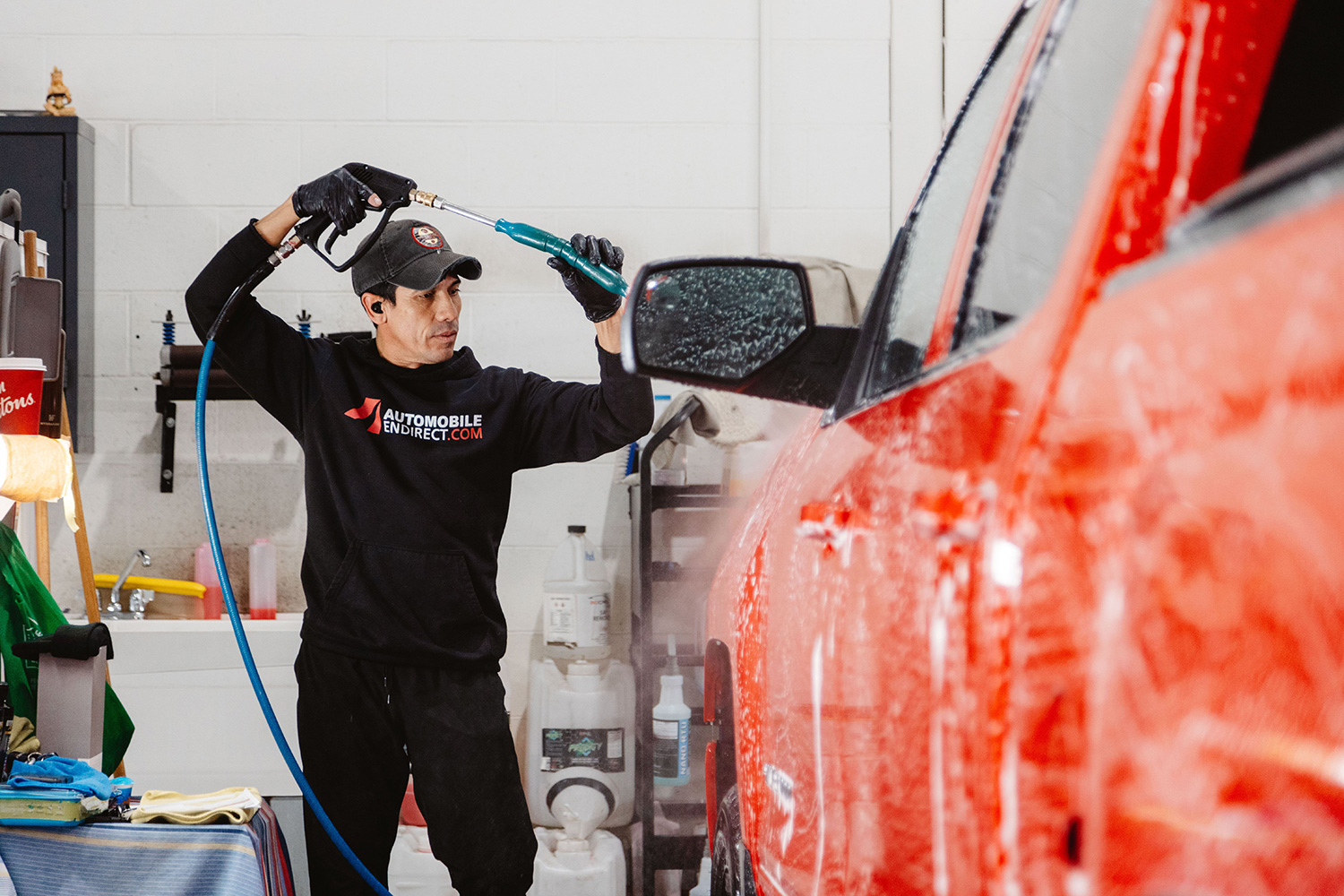
This way of thinking is problematic in that washing it is more important in the winter than the rest of the year. The sand, melting snow and ice mixed with road salt are precisely what causes your vehicle to rust.
The most rapid corrosion occurs when temperatures fluctuate around the freezing point.
During the cold months, rinse the chassis and places that are difficult to access but are sensitive to rust, like the bumpers and the inside of the wheel wells. If the outside temperature must stay above freezing long enough for your car and garage entrance to dry, fill a bucket with hot water and do the work at home. If this is not the case, go to your local car wash and make sure the employees dry your car well.
9-Maintain the proper tire pressure
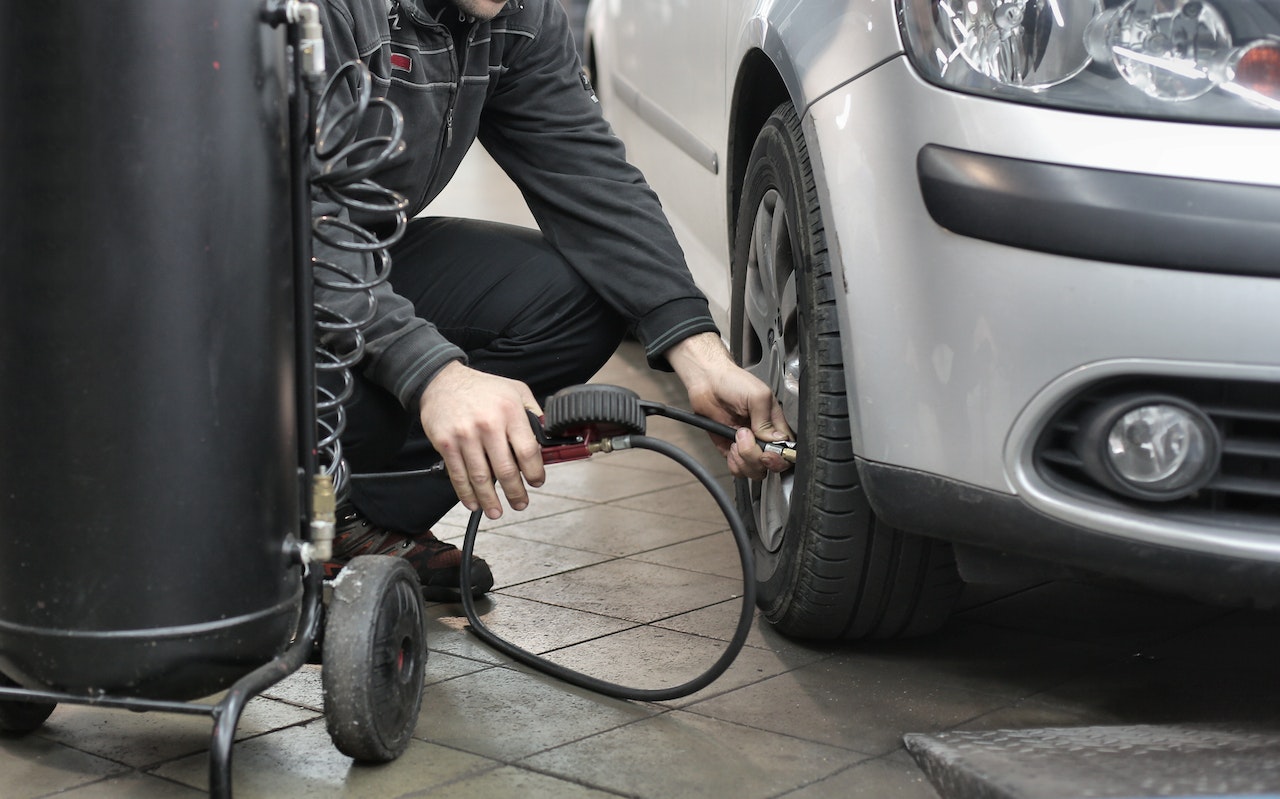
A badly-inflated tire undergoes excessive heat and stress that can cause its failure.
If you want your tires to last as long as their maximum lifespan, get yourself a tire gauge and use it at least once a month (more often in hotter weather) to keep them inflated to the recommendation of the owner’s manual. For an accurate reading, check the tires when they are cold – they must have rolled less than 1.5 kilometers.
10- Verify your tire treads
Tires should be replaced once the tire tread depth is less than 1.5 mm (1/16 of an inch).
- Tires sold in North America must have molded tread-wear indicators to make it easier to see when tire replacement is required by law.
- If you’re driving in the rain, you should change your tires once the tire tread is less than 3 mm (1/8 inch) on the left. Otherwise, your tires may not evacuate the water quickly enough and you run the risk of hydroplaning. This can be very dangerous since hydroplaning can result in your vehicle’s loss of all traction and gliding on the water.
- For driving on snow you will need at least 5 mm (3/16 inch) treads to get adequate traction. You can test them by inserting a quarter into one of the winter tire treads. If you can see the tip of the caribou’s snout, your tread is less than 4.8 mm (6/32 inch) deep and won’t last a full season of 10,000 km.
11-Don’t forget to rotate your tires
Tire rotation helps to evenly distribute the wear and ensures their optimal lifespan on the road.
- The first rotation is especially important.
- Your owner’s manual should normally indicate the rate of rotation. If that’s not the case, rotate your tires every 9,700 to 12,000 km (6,000 to 7,500 miles). Your car mechanic should know the best rotation rate!
12- The temperature can alter your tire pressure
When outside temperatures fluctuate, tires tend to lose pressure.
- A 6º C (10º F) drop can cause your tires to lose 1 to 2 pounds of pressure.
- Tires can lose even more pressure in the heat.
- Under-inflated tires wear more rapidly and hinder driving.
- If you live in a region where temperatures vary a lot, check your tire pressure often and add air as needed.
13-Have your tire alignment checked.
Check your car’s tire alignment every 48,000 km or as recommended in your owner’s manual.
- Also have it verified after purchasing new tires and when you replace your rack-and-pinion steering system or other steering parts.
- Bad tire alignment shortens their lifespan and impairs your car’s handling. If the steering is more stiff than usual or if your car pulls to one side, you probably have an alignment problem.
14-Verify your oil level every two fuel fill-ups
For a proper reading of your oil level, follow these instructions:
- Turn on the motor or drive for about 15 minutes to warm up the oil, then park your car on a flat surface. Stop the motor and wait 15 minutes to let the motor oil flow into the pump.
- Remove the gauge and wipe it with a paper towel or rag. Reinsert the gauge and push it in deep, then remove it to check the oil level. It should be between MAX. and MIN.
- As needed, add the type and quantity of oil recommended by the manufacturer.
15-Change your oil frequently
Even though today’s manufacturer manuals recommend longer and longer intervals between oil changes, the fact remains: frequent changes clean the motor from abrasives and metallic particles, which in turn preserves its duration.
Most manufacturer manuals recommend that the oil be changed more often when driving in «difficult conditions». Follow these recommendations to optimize your motor’s lifespan, especially if you regularly drive in conditions that require frequent stops and starts
16- Verify the state of your battery
Does the manufacturer assure you that your battery doesn’t need maintenance? Don’t believe it! Check it regularly in order to prolong it’s life and avoid the hassles of an uncharged battery.
- Start with the simplest: keep it clean. A dirty battery casing can cause it to lose charge. Wipe it with a damp cloth and use a mild detergent if necessary
- Then clean the battery terminals. Loosen and remove the negative cable (black) followed by the positive cable (red). Use a brass-wire battery brush with a paste made of a few tablespoons of bicarbonate of soda and a bit of water.
- Reinstall the cables, positive first, then coat the terminals and clamps with a fine coat of grease to prevent any further corrosion.
Don’t mistreat your battery
If you accidentally leave your lights on and drain your battery, take the following precautions in order to avoid damaging your battery and starter when you restart the engine with assistance.
- Don’t risk having your battery explode. Cut the engine of the assisting vehicle and connect an extremity of the positive cable to the positive terminal of the uncharged battery.
- Connect the other end of the positive cable to the positive terminal of the source battery.
- Connect the end of the negative cable to the negative terminal of the source battery.
- Fix the remaining negative cable on a metallic and unpainted part of the vehicle’s motor (far from the uncharged battery).
- Wait several minutes and then try to start the vehicle whose battery is dead. If it doesn’t start, start the engine of the assisting car and try to restart the car with the battery problem.
- Once the vehicle starts, remember to remove the cables in the inverse order from when you connected them.
If the car still doesn’t start, don’t try to recharge it: you risk damaging the starter. Bring the battery to a garage to see if it can be recharged.
Even if you manage to restart the motor, make sure you have a complete charge by hooking the battery to a charger overnight or by driving the car a distance of 8 to 16 km.
*Article credit: All the information presented in this document has been found and is taken from the following article:https://www.selection.ca/auto/entretien-auto/26-conseils-pour-prolonger-la-duree-de-vie-de-votre-voiture/